October 2026 · 5 min read
Why AI recommends some local businesses and not others
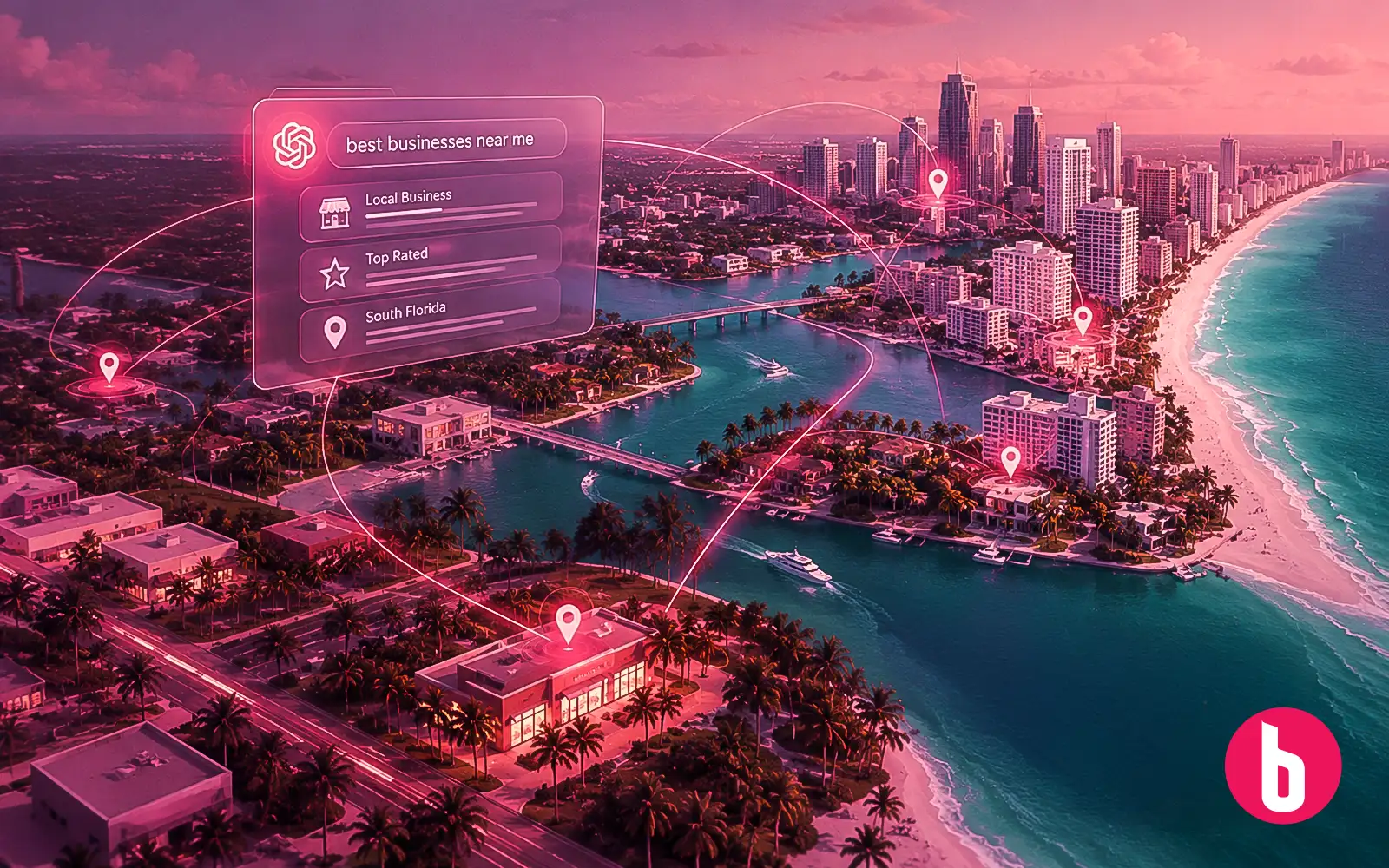
AI assistants like ChatGPT, Gemini and Google AI Mode recommend the local businesses they can understand and trust. In my work it always comes down to five things: a clear website, facts machines can read, a complete Google Business Profile, fresh reviews and other websites that mention you. Nobody can buy a spot in the answer, but every business can become easier to recommend.
Picture a homeowner in Pembroke Pines asking ChatGPT, “Who is a good roofer near me?” A few seconds later it names three companies. Not ten links. Three names. If your business is not one of them, that customer never even sees you.
I see this shift every day in my work and the numbers back it up. This year, a national survey of 1,002 U.S. consumers found that 45% used ChatGPT or another AI tool to get local business recommendations. A year earlier it was 6%. And people believe it: almost two out of three people who use AI trust the businesses it recommends.
U.S. consumers who used AI to find a local business
AI does not guess. It reads.
The first thing I learned studying how these assistants work is simple: AI does not know your business. It builds its answer from what it can find and check online. Your website, your Google listing, your reviews and what other websites say about you. When those sources are clear and agree with each other, the AI has something solid to work with. When they are thin, outdated or say different things, it simply picks someone else.
That is why I tell every owner the same thing. AI does not reward the biggest business or the loudest one. It rewards the clearest one.
The five things AI checks before it names you
1. A website that answers questions in plain words
AI reads your website like a new employee on the first day. It needs to see what you do, where you do it, your hours, how to reach you and the answers to the questions customers ask most. A page that only says “quality service since 1998” tells it nothing. A page that says “We repair tile and flat roofs across Broward County and inspect within 48 hours” gives it a reason to mention you.
2. Facts machines can read
Your customers read your website with their eyes. AI reads it with a machine. It needs your basic facts in a form it can understand without guessing: who you are, where you are, what you offer and when you are open. This is a big part of how we design every website at Bizsual. Your visitors will never notice that work, but AI does.
3. A complete Google Business Profile
Google ranks local results on three things: how well you match the search, how close you are and how well known you are. A profile with complete and accurate information has a better chance of showing up. Categories, services, hours, photos and a verified address all count. And no, you cannot pay Google for a better spot. That is one of the first questions owners ask me.
4. Fresh reviews, with replies
Almost everyone reads reviews before choosing a local business. In that same survey it was 97%. Three out of four people care about reviews from the last three months and nine out of ten expect the owner to reply. Most people now even read the review summaries AI writes. Reviews tell AI the same story they tell people: real customers keep choosing you and they did it recently.
5. Other websites that mention you
AI trusts what it can confirm. When a local news story, a chamber of commerce page or an industry directory mentions your business with the same name, address and phone number as your website, the AI finds a second and a third source agreeing with the first. When your phone number is different on every site, it has a reason to doubt.
I dug into a study of 800 local searches in ChatGPT and the pattern was clear. More than half of the sources it used were business websites. About a quarter were articles and pages that mention businesses. The rest were directories. Your own website comes first, but what others say about you comes right behind it.
Where ChatGPT found its answers for local searches
Two bakeries, one question
Imagine two bakeries in Fort Lauderdale, both with great cakes. The first has a beautiful website made almost entirely of photos. Its address lives inside an image, there is no menu in text and no prices. Its Google profile still shows last year’s holiday hours and its newest review is from last spring.
The second has a simpler website that says what it bakes, which neighborhoods it delivers to, how far ahead to order a custom cake and what a tiered cake usually costs. Its Google profile shows the same hours as the website, photos from this month and a steady stream of reviews, each one with a short thank you from the owner. A local magazine also mentioned it in a holiday guide.
Now someone asks an AI assistant, “Where can I order a custom birthday cake in Fort Lauderdale this weekend?” The AI can read and confirm almost everything about the second bakery. About the first, it can confirm very little. This is not about which cake tastes better. It is about which bakery the AI can actually understand.
What does not work
There is no secret code and no paid spot. Google says it plainly: there are no extra requirements to show up in its AI answers. The basics still win. Shortcuts like buying fake reviews do not build trust. They never give AI a real reason to recommend you.
Where Bizsual comes in
Here is the honest truth: most owners do not have the time to keep up with how ChatGPT, Gemini and Google pick their answers. They are busy running the business. That is exactly why we exist.
Before we design anything, we study your market, your customers and the businesses AI is already naming in your area. Then we design your website from scratch, line up your Google profile and your listings and make sure every source tells the same clear story about you. It is the work behind the scenes that turns a business AI barely knows into one it can understand and trust.
The bottom line
AI recommends the businesses that are easiest to understand and easiest to trust. That is good news for local owners, because both can be fixed. No one can promise you a spot in the answer. What we can do is give AI and super intelligence agents every reason to read you, cite you and recommend you.
If you asked AI about your business today and it named someone else, let’s talk. That is the conversation we love to have.
Jose Perdomo III
Creative Director, Bizsual. Manifesto